Fire protection strategies fall into two main categories: passive and active. Both are essential in reducing the risk of fire and protecting lives, but they operate in very different ways. Understanding the difference is crucial for any business owner or facilities manager.
Passive Fire Protection
Passive fire protection (PFP) involves the use of building components designed to contain fires and slow their spread. These systems don’t require human intervention or external activation. Examples include:
- Fire doors
- Fire-resistant walls and floors
- Fire stopping (e.g., sealing cable penetrations)
- Compartmentation
MAGG Fire Services regularly installs and inspects passive fire protection systems as part of our comprehensive safety solutions. For example, our fire door inspections help identify faults such as gaps, warped doors, or non-compliant signage.
Active Fire Protection
Active fire protection (AFP) refers to systems that respond to a fire event, either manually or automatically. These include:
- Fire alarms
- Sprinkler systems
- Fire extinguishers
- Smoke control systems
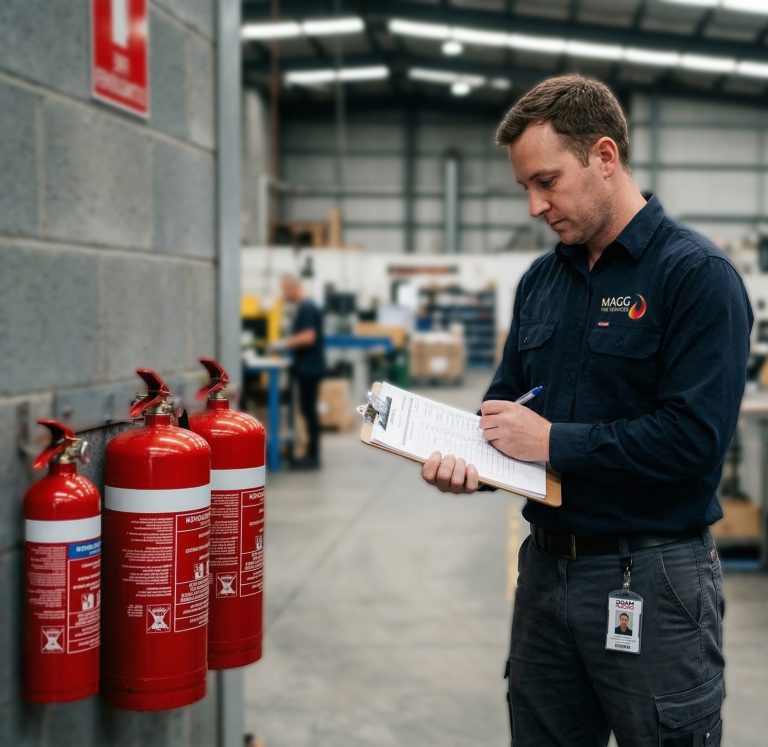
We also provide fire extinguisher servicing and fire alarm testing, ensuring our clients—from nurseries to care homes—remain protected and compliant.
Which Do You Need?
The answer is: both. Passive systems buy time, while active systems help detect and suppress fires. MAGG Fire Services helps businesses implement balanced protection by assessing risks and installing a combination of both measures.