When a fire breaks out in a commercial or residential property, every second counts. Having the right fire safety equipment on hand can prevent a minor incident from escalating into a disaster. However, fire safety is not a one-size-fits-all solution. Using the wrong type of extinguisher on a blaze can make the situation significantly worse, putting lives and property at immediate risk. Understanding your equipment is a fundamental part of meeting your legal responsibilities under UK fire safety legislation.
Property owners and designated responsible persons often wonder what are the 4 types of fire extinguishers commonly found across UK buildings. Knowing how to identify and operate these units correctly forms a core part of effective Fire Extinguisher Training for Businesses. Below, we break down the four primary extinguisher variants, their distinguishing features, and the classes of fire they are designed to tackle.
1. Water Extinguishers
Water extinguishers are among the most common units found in UK buildings, typically identified by their bright red body. They are designed exclusively for Class A fires, which involve solid combustible materials such as paper, wood, textiles, fabric, cardboard, and coal.
How they work: Water cools the burning material, removing the thermal energy required to sustain the fire and soaking into the embers to prevent reignition.
Important safety note: Never use a standard water extinguisher on electrical equipment. Water conducts electricity, presenting a severe risk of electrocution to the user. Similarly, they must never be used on cooking oil or fat fires, as the water will cause the hot oil to splash violently and spread the flames.
2. Foam Extinguishers
Foam extinguishers feature a cream-coloured identification band above the operating instructions. Like water units, they are primarily rated for Class A fires involving solid materials, but their formulation also allows them to tackle Class B fires involving flammable liquids such as petrol, diesel, paint, and spirits.
How they work: The foam agent forms a blanket over the surface of the burning liquid. This seals off the oxygen supply and prevents flammable vapours from escaping, while the water content within the foam provides a cooling effect.
Where they are used: Foam extinguishers are versatile additions to industrial units, warehouses, workshops, and general office spaces where both solid combustibles and flammable liquids may be present.
3. Carbon Dioxide (CO2) Extinguishers
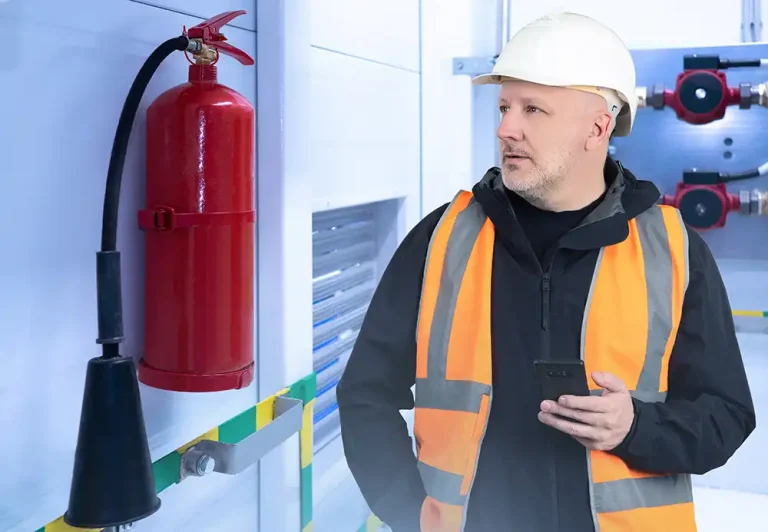
Easily recognised by their distinct black band and unique horn-shaped nozzle, Carbon Dioxide extinguishers are the primary choice for electrical fire risks. They are also effective against Class B flammable liquid fires.
How they work: CO2 units discharge pressurised carbon dioxide gas, which displaces the oxygen surrounding the fire. Because the gas leaves no residue, it does not damage delicate electrical machinery or IT equipment, making it an essential choice for modern office environments.
Best practices: When using a CO2 extinguisher, always hold the insulated handle rather than the plastic horn, as the discharge process causes the horn to become extremely cold. For broader guidance on managing workplace hazards, review our recommendations on Electrical Safety Tips & Fuse Guide.
4. Dry Powder Extinguishers
Dry powder extinguishers are identified by a blue band. Often referred to as ABC powder extinguishers, these are exceptionally versatile units capable of handling Class A, Class B, and Class C fires involving flammable gases such as methane, propane, and butane. Some specialized powders are also rated for electrical equipment.
How they work: The fine chemical powder interrupts the chemical reaction of the fire, instantly knocking down the flames.
Important considerations: While dry powder is highly adaptable, it has notable drawbacks. The powder reduces visibility during discharge and can severely damage electronics and machinery. Furthermore, it does not penetrate deep-seated materials, meaning fires can sometimes reignite if not properly managed. Because of these factors, standard indoor use requires careful risk assessment, particularly in enclosed spaces.
Ensuring Your Premises Remain Compliant
Identifying the correct equipment is only the first step in maintaining a safe building. Legislation requires that all fire safety equipment is regularly inspected, maintained, and serviced by competent professionals to ensure it functions reliably when needed. You can learn more about statutory upkeep through our professional Fire Extinguisher Servicing & Safety Signage provisions.
Ultimately, having the correct extinguishers installed provides little protection if staff members lack the confidence to use them safely. Practical instruction ensures employees can act decisively during the crucial early stages of an incident. To discuss your equipment requirements or arrange professional servicing for your site, explore our comprehensive Fire Safety Services & Compliance today.