Protect your team, your premises, and your peace of mind
When it comes to fire safety, having the right equipment is only part of the picture. Without proper training, even the best-placed extinguisher can be misused — and in a real emergency, that split-second decision could mean the difference between control and catastrophe.
Understanding the causes of fire, knowing how to respond, and being confident in using firefighting equipment are essential skills in any workplace. Fire safety training equips your team with the knowledge and hands-on experience they need to react calmly, correctly, and safely.
The Dangers of Acting Without Training
Attempting to tackle a fire without proper instruction can be extremely dangerous. Using the wrong type of extinguisher or applying it incorrectly can worsen the situation — and put the user at serious risk.
Professional fire training ensures that staff understand:
- The different types of fire (Class A, B, C, etc.) and the appropriate extinguishers to use
- How to operate extinguishers effectively and safely
- When to attempt to extinguish a fire — and when to evacuate
- How to assist with a safe and orderly evacuation of the premises
Why Fire Training Is Strongly Recommended
Although not all fire training is legally mandatory, the Regulatory Reform (Fire Safety) Order 2005 places a clear duty on employers to ensure staff are trained in fire safety procedures relevant to their role. The government’s fire safety guidance recommends that fire drills and refresher training be carried out at least once a year, and more frequently for higher-risk environments.
In short — having fire extinguishers installed is not enough. Staff must be able to use them confidently and correctly if ever required.
- Trained employees are more likely to respond effectively in a crisis
- They can help lead others to safety
- They are less likely to panic, freeze, or make a hazardous mistake
Important Reminder: Evacuation Comes First
Fire extinguishers should only be used if it is absolutely necessary to aid a safe exit. If it’s possible to leave the building without using one, that should always be your first option.
Remember: Get out, stay out, and raise the alarm.
Do not endanger yourself by staying behind to fight the fire, and always consider whether others may need access to that extinguisher to escape.
Our Fire Training Courses
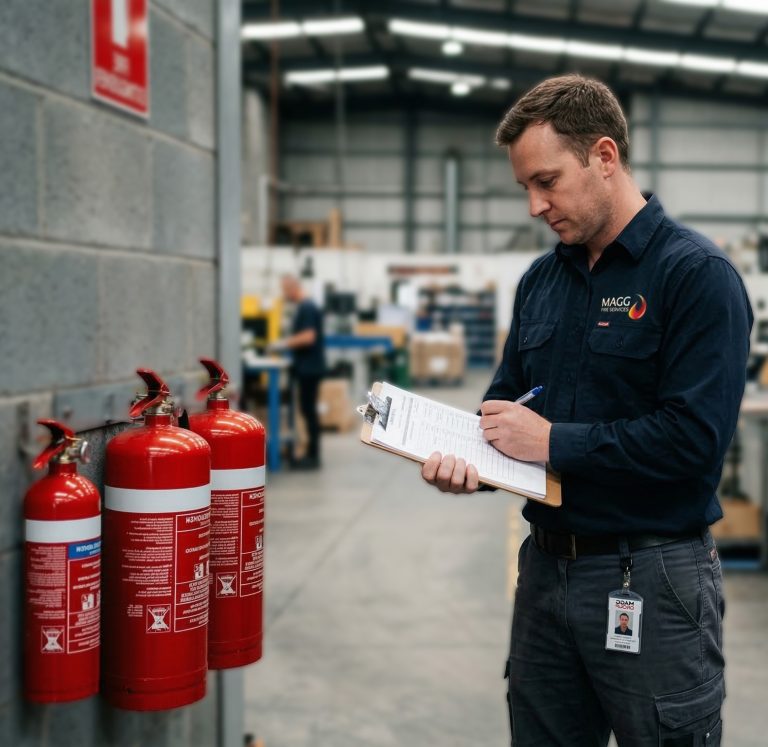
At MAGG Fire Services, we offer practical, engaging training sessions tailored to your team and delivered at your place of work. All our training is CHAS-accredited and in line with the latest safety legislation and best practices.
Fire Safety Training Courses Available:
- Fire Extinguisher Training – Learn how and when to use the correct extinguisher with hands-on experience
- Fire Marshal / Fire Warden Training – Prepare designated team members to coordinate safe evacuations and manage fire procedures
- General Fire Awareness Training – Ideal for all staff, covering fire prevention, safe behaviour, and emergency response basics
Our courses are designed to be practical, informative, and tailored to your specific workplace risks. Whether you operate in an office, warehouse, retail space, or multi-occupancy site, we’ll help ensure you meet your legal obligations — and that your staff have the knowledge and confidence to stay safe.